Showing posts with label Christianity. Show all posts

Thursday, 6 July 2017

A Restlessness Which Leads to Peace


You have formed us for Yourself, and our hearts are restless till they find rest in You
(St Augustine, Confessions I)

The 20th Century Zen teacher Charlotte Joko Beck said 'the point isn't the search, but rather the distress and unease which motivate the search.' This is a fairly sound observation. We are, each of us, individual subjects who seek in external objects the means to bring us that state of happiness which is necessarily an internal experience.

It is as if we were responding to a feeling of hunger by going dancing or shopping for new shoes. These can be such effective distractions that we forget our hunger. Nonetheless however busy we keep ourselves or however much we immerse ourselves in company there will always be times when we are alone and undistracted. It is then that we once again become aware of the gnawing emptiness at the centre of our being.

If the best response to hunger is eating then what is the best response to that distress and unease which proceeds more from the mere fact of being alive than from any one specific cause? My supposition here is that from the moment we first become conscious of ourselves as individuals until we draw our final breath we are always more or less uncomfortable about something. Since, during the course of a normal lifespan, every one of these particular somethings will change thousands of times the source of the discomfort does not rest in them as such but in our responses to them.

As I understand it (and I may be wrong) Zen argues that the problem lies in the human use of imagination. We do not experience reality as it exists in itself but only things which have been through a process of distortion by our thoughts before they present themselves to the observing part of our mind. That is, when looking at a thing or persons our ego, to put it crudely, asks and answers the question 'what's in it for me?' And then presents the image plus conclusion to the observing mind. Much of this processing happens below the level of consciousness and is practically instantaneous so that we are not aware of it, only of its results.

Additionally at any given moment we will, at some level, be thinking about the past or the future. Neither of these things have any real existence. Only the present moment exists. What, therefore, we hold in our minds is something which is both unreal and subject to ego centred imaginative distortions. The distress and unease which leads to a search for something to bring peace is a product of the radical strain we experience through inhabiting a reality which we never accurately recognise or appropriately respond to.

Much of this is good psychology and can be adapted fairly easily to Catholic belief. However Zen (again with the 'as I understand it' limitation) goes on to conclusions incompatible with Christian belief. Letting go of all our illusory thoughts, feelings and beliefs and being present fully and only in the moment we become aware that emptiness is the nature of being and that's all right. Our Self has no objective existence but is just something that comes into being and passes away with the moment, like the moment. The observing mind is simply the underlying Buddha nature of the moment and all it contains and of every moment. Realising our Buddha nature is to become one with all that really is and so our distress and unease, the products of imagination, melt away. Since we are oned with All we feel compassion for All and this compassion will be manifest in all the acts which we perform within the moment in which we happen to be.

While this Zen vision is not as nihilistic as some Christians claim it certainly lacks the Divine spark. If we are fully present in this precise moment then part of the reality we must encounter will be God. Not an abstract deity which is just another label for 'Buddha nature' but the personal God who loves me, who became Incarnate for me and suffered death for me on the Cross. This 'now' we are living in is not just something we observe it is also someone towards whom we are always relating, a relationship of love.

It is true that He is not the God of our imagining, the God we rebel against, the God whose existence we deny, the tyrant God. He is as He is and to know Him as He is we must let go our illusory thoughts about Him. It is true also that He may choose to be present to us in the form of absence; but this is a function of our relationship, it is the form He knows to be best suited to me at this time to help me understand Him better and love Him more. But He will appear to us under more than one form, as the sacrament of the altar, as the action of grace in our hearts, as 'something understood.' He is always with us.

If we are fully present in the God breathed 'now' and in all the 'nows' of eternity then this Love will grow as a reflection of His. And as His was a self-giving, sacrificial love for all that He had created, more than a passive compassion, then so must ours be. The restlessness that drives us to find rest in Him gives birth to the love that seeks to bring peace to all whom we encounter.
@stevhep

Catholic Scot has a Facebook page

My *other* blog is thoughtfully detached

The Charlotte Joko Beck quotation is from a talk called The Search in her book Everyday Zen

The picture is a detail from The Conversion of St Augustine by Fra Angelico 

Sunday, 16 October 2016

In the Shadow of Medina

Christian & Islamic Visions of an Heroic Age


The English historian Tom Holland, through his book In the Shadow of the Sword, gives an overview  of several crucial centuries during which the Middle East was fundamentally and world-changingly altered. The epoch in question, late antiquity, saw the effective end of two ancient empires, Roman and Persian, as well as the emergence of a new one, the Arab. These events were of profound religious significance as well as being geopolitical earthquakes since each empire was associated with what are now, in 2016, distinctive religions Christianity, Zoroastrianism and Islam respectively. Mr Holland's approach aroused some controversy because he discounted as unreliable most of the accounts which we have of the rise of the new empire on the grounds that they were first written down some two centuries after the events which they describe. As these accounts represent not only a story of Arab conquest but also the foundational mythos of Islam itself this is rather delicate ground upon which to tread.

Relying on the scant resources which are more or less contemporaneous with the remarkable transformation of the region Tom Holland develops an explanatory hypothesis which is admittedly speculative or, in his own word, 'provisional'. It is well beyond my competence to comment on these matters I was, however, struck by some things which are present clearly in the Holland version and in a more veiled form in the 'official' narrative. Firstly, it seems clear that the career of the founder of Islam can be divided into a period where he proclaimed the new faith in the face of opposition before a flight (hijrah) to the city now called Medina where, in phase two, he and his emigrant companions (muhajirun) set about building a State and expanding its frontiers. Secondly, the essential groundwork to what are now orthodox Sunni Islamic doctrines and practices began to appear in written form in southern Iraq during the era of the Umayyad Caliphs some decades after the Arab victories.

So, why am I writing about all this in a Catholic blog you ask? I think that if we look at the way in which our respective orthodoxies began to be formed we can see crucial and irreducible differences between Catholicism and Islam, differences which still matter today and cannot be wished away by airy references along the lines of 'we all worship the One God'. Leaving aside conspiracy theorists like Dan Brown, the new atheists and liberal theologians it is generally accepted that the basic framework of Catholic orthodox belief, its core texts and fundamental doctrines, were in place before the Emperor Constantine revolutionised the relationship between Roman Church and Roman State. This means that Christians being excluded from power first addressed themselves to questions of meaning and thus engaged from the outset with the ideas of philosophy, something we can see in St Paul and St John within the canon of the New Testament itself. As an aside I would note that although we are frequently told that an advanced Islamic civilization exported philosophy to a backward Western Europe it is the case that philosophy helped to form Christian thought from the beginning whereas Muslim philosophers had to deal with an already existing and sometimes hostile body of Islamic orthodox thought when they began their work.

I digress however, another consequence of powerlessness was that the Church could appeal to the marginalised and excluded as being of their number itself. Combining these two elements early Christian thinkers focussed on the texts and examples from their own history which most addressed their own radical powerlessness and exclusion and developed their theological doctrines on that basis. There are few things more inspiring than the example shown to us by heroic figures whom we can imitate. For the formation of the Church's self-image the icons which they looked to were the life of Jesus, who was arrested and executed (without resistance), and the history of the Apostolic era where the primitive Christian community was persecuted (also without resistance) and scorned. For the Church as Church it's history of being the patient victim of misused power became the heroic age towards which it looked as the gold standard for guidance about how to behave in every age.

Several centuries later Iraqi Muslim scholars found themselves in a radically different situation when they came to mould their inchoate mass of ideas and texts into a single universally useable form. While they themselves might be out of power their rulers were all professedly Muslim. Consequently they had every reason to develop doctrines that could and should be adopted and implemented by the Caliphal State. Therefore the heroic age towards which they looked was post-hijrah Medina and the behaviour of their religion's founder together with his empire-building companions and successors among the muhajirun. This was logical enough, the founder had faced problems and difficulties which could be seen as analogous to those of their own situation. As he, the founder, was inspired by God but the Caliphate's current rulers obviously were not the presumed example of the founder could be used as a stick with which to beat the rulers into changing their behaviour.

Like Christianity it was the case that Islam too made its appeal to the marginal and excluded but it did so in the context of a very different situation. In its early centuries to become Catholic was to risk persecution, during the equivalent era of Islam becoming a Muslim was a way to escape persecution or, at any rate, punitive taxation. Looking towards different icons of heroism and having different relationships with the State inevitably led the two orthodoxies down wholly divergent paths where the notional shared belief in the One God became very much a second order question.

It would be a profound mistake to suppose that these different origins are no more than an interesting historical background. They are profoundly important for the essential natures of the two great faiths and for the societies influenced by them. Islam, as it began to be understood in Umayyad Iraq, had no Christ Crucified and no suffering pilgrim Church or their equivalents nor does 21st Century Islam. And that matters, it matters a very great deal. In the shadow of Medina Islam is a religion which understands the use of State power and Law not from the position of an outsider who needs to fear it but from that of an insider who may wield it. To that extent it is the polar opposite of Christianity regardless of its monotheism. Friendship between Christians and Muslims there may be and co-operation between religious leaders there should be but one can only underplay the differences in belief by sacrificing basic elements of one's existing identity.

There is a 'new thing' in the world though. Today there is a large and growing Muslim population living outside Muslim lands. The original viewpoint of Islamic orthodoxy had in mind a model where the Caliphate, the House of Islam, stood in relation to those outside its borders as potential conquerors and Muslim minorities would also be ruling minorities. That has not, fortunately, transpired so the Muslim diaspora has to work out a doctrinal and theological modus vivendi for flourishing in non-Muslim lands into the foreseeable future. One approach, the most highly publicised, is to renew the pattern of conquest and incorporate Western lands into a new Caliphate. The idea that this might succeed appears to us as vanishingly unlikely, no doubt, as the prospect of an Arab Empire appeared to seventh century Romans and Persians.

There is another possible approach though. The powerlessness of minority Muslim communities has some resemblance to that of the early Church. This makes the pre-hijrah experience of the founder of Islam and his companions much more of a suitable icon for them than the Medina model. The time of persecution and meekness in what tradition names as Mecca (though Tom Holland dissents) will be much more serviceable to diaspora Muslims than any muscular assertion of a power which they do not possess and are unlikely to possess any time soon. Certainly there are many, to put it mildly. 'difficult' passages in the Quran which they will require to reinterpret creatively or subsume to milder ones but Christians are in no position to get sniffy about difficult Scripture passages in anybody's religion. This will be a dangerous enterprise for Muslims to embark upon (and it goes without saying that in my opinion Christianity is a superior option to any redaction of Islam) because it will spark a violent, literally violent, response from Muslim conservatives.

I think, nonetheless, that if Muslim thinkers and writers outside the House of Islam can create a form of their religion which escapes the shadow of Medina and embraces the example of Mecca then they will be doing their faith and the rest of the world a great favour. They will also be demonstrating a great truth that the pen is indeed mightier than the sword.
@stevhep

Like the Catholic Scot page on Facebook

My other blog is thoughtfully detached. 

The picture is The Rawdah Mubarak in Medina where the founder of Islam is reputed to be buried.  


Wednesday, 24 August 2016

Hannah the Mother of Samuel


His mother used to make for him a little robe and take it to him each year, when she went up with her husband to offer the yearly sacrifice.
(1 Samuel 2:19)

Often in the Church when we think of holy women we consider them in the context of their relationships. Thus Hannah and St Monica are the mothers of Samuel and St Augustine respectively and St Scholastica is the sister of St Benedict and so on. This approach is not confined to the Church, there was much feminist criticism during the 2016 summer Olympics that commentators referred to the marital or parental status of female competitors but not that of male ones.

It is, I think, true that we are more prone to think of women in relational terms; that they inhabit a complex web of familial relationships which play a significant role in defining them. More or less implicit in this is the notion that these relationships should be a priority for women and that things like sport, business or academia should take second place. Men, by contrast, are considered as free-standing individuals who make the world by their unaided efforts and for whom this world-making is and should be their priority.

This is undoubtedly an unbalanced approach but, I believe, it would be perverse to attempt to counter it by censoring out reference to these relationships. We should, rather, change our attitude towards men. Samuel was the son of Hannah as St Augustine was of St Monica; St Benedict was St Scholastica's twin sibling. These men were no less defined by their relationships than the women were by theirs and, indeed, Samuel and Augustine owed more to Hannah and Monica than their mothers did to them. It takes a village (and a family) to raise a boy every bit as much as it does a girl. Men are not free-standing, individual world-makers they are sons, brothers, fathers, husbands and without these relationships to sustain and nurture them they would not only be low achievers they would be spiritually and emotionally deprived human beings.

It might be contended that it is precisely because men did not prioritise their relationships that they were able to go out and create modernity through exploration, innovation and risk taking. So much the worse for modernity. We are mistaken if we think that material gains and benefits outweigh spiritual and emotional losses and a slower pace of economic and scientific development is a price worth paying for a world in which both men and women are fully engaged in a complementary way with the lives of their families.

To put it another way, what we require is a civilisation of love. By its very nature love is a relational thing which, moreover, is characterised by sacrifice of self in the service of ones obligations towards the beloved. Which brings us to Hannah, the mother of Samuel. There is something poignant in the use of the word 'little' to describe the garment which Hannah took with her on her annual trip to see the infant son for whom she had so longed. Those of us who live in the post-industrial revolution era may miss the significance of the word 'made' but this robe was not a shop bought, factory produced thing. Hannah put it together herself and we can picture her bending over it for hours. Every little action associated with its making would have been charged with love. No doubt she would have shed tears over it, tears of devotion for her son, tears of pain at the long separation from him.

Yet this separation was not forced upon Hannah by a jealous and demanding God it was a freewill sacrifice which she made and sustained in gratitude and love towards the One from whom Samuel had come as gift. The child had been put into the service of the Lord's worship at the Ark of the Covenant in Shiloh as a grateful response by Hannah to the way that God had heeded her prayers. This was by no means a usual thing in Israel, Samuel was the only child so placed, nor is there any suggestion that the Almighty had demanded this as a quid pro quo for ending Hannah's childlessness. The supernatural virtue of Justice consists in giving each their due beginning with God and descending to the least and most vulnerable of His creatures (such as the unborn.) Hannah showed herself to be a just woman because she retained nothing for herself giving to the Lord that which was most precious to her and giving to her son all the love and prayers which she could. Each year she added to that to the extent of a little robe made by her own hands and touched by her tears.

As well as being poignant there is something beautiful in this scene which Scripture paints for us. The poet Keats tells us-
'Beauty is truth, truth beauty,—that is all  
    Ye know on earth, and all ye need to know.'
The nearer we approach to the perfection of a supernatural virtue like Justice, Truth or Love then the more beautiful we and our actions become. Compared to this annual pilgrimage of Hannah no amount of world-making, medal-winning, scientific breakthrough-ing by men or women has a tenth part of its loveliness. We should stop apologising for drawing to attention the fact that women are mothers and start apologising for all the times we have failed to recall that men are sons.
@stevhep

Like the Catholic Scot page on Facebook

My other blog is thoughtfully detached

The painting is Hannah presenting her son Samuel to Eli by Jan Victors


Friday, 1 July 2016

Down With Agitation!


There is no sin nor wrong that gives a man such a foretaste of hell in this life as anger and impatience.
(St Catherine of Siena Letter to Monna Agnese)

The 5th Century Greek Bishop St Diadochos of Photiki wrote "those pursuing the spiritual way must always keep the mind free from agitation." Those of us living in tumultuous times for ourselves, for our country or for the world may ask- is this true? Is this possible? It is perhaps the obviously right course of action for those living a contemplative life in monasteries but for those whose spiritual way includes an active struggle for justice and peace in the world  is it not a counter-intuitive piece of advice?

I think that if we are seeking change we ourselves must become the change we are trying to bring about. Aiming to reduce injustice in the world we must ourselves be just. Struggling against greedy materialistic societies we must be frugal in not only our use of resources but in our very desire for possessions. So too with anger and impatience, if we long for a kinder, gentler, more patient world when we encounter situations where none of these things are present we should be kindness itself, gentleness itself, patience itself.

This is fine in theory you might say but can it really be done while we are still engaged in the storms of life? And those who know me might add "physician heal thyself" since I am not always noted for calmness and conciliatoriness in the heat of political disputes. In her letter to Monna Agnese St Catherine wrote "by displeasure against itself the soul will drive out displeasure against its neighbour." Self-awareness is a necessary prelude to a mind free from agitation. As soon as we recognise within ourselves symptoms of conducts or attitudes which we would condemn in others then we need to pause for reflection.

An ancient Catholic practice which has somewhat fallen into disuse is the daily examination of conscience at the end or beginning of the day. This gives us the chance to notice what may have been hidden from us by the dusts stirred up in our whirlwind everyday lives. If that includes, as it surely will, moments of agitation, anger and impatience then we need to acknowledge that, sincerely repent of it seeking forgiveness from God and from our neighbours and firmly resolve to avoid future occasions of sin. This requires not only an act of the will but also small practical resolutions which we can immediately put into action.

One such resolution might be to get into the habit of asking ourselves "what is the most likely outcome?" before we start a conversation, on social media or elsewhere, about some matter of controversy. If the answer is that at the end of the process everyone will be more convinced than ever that they were right and they will have added several layers of anger to their pre-conversation state of mind then we would do well not to embark upon this discussion at all. We should also regularly ask ourselves "why am I doing this?" when we are carrying out a course of action or find ourselves unexpectedly involved in a controversy. And if the answer is, again, "in order to prove myself right" then we need to immediately cease and desist.

None of this means that we are obliged to shy away from the struggle to make the world a better place. It means that we should use our energy positively and constructively, and thus calmly, not negatively and destructively, and thus agitatedly. Looking at our two questions, if the likely outcome is that people will be persuaded to change their minds then go ahead with the conversation. If we are acting because there is a good chance of success then keep on acting. Even so, another key idea to frequently call to mind is "magnanimous in victory, gracious in defeat." Triumphalism on the one hand or bitterness on the other are both negative energies which will defeat our own inner peace more than they will achieve any benefits for our own cause. Magnanimity and graciousness moreover are not enemies of spiritual wholeness but manifestations of it.

Of course these things are difficult to achieve and easy to forget. This is why the daily examination of ourselves in the mirror of Christ Crucified is so crucial to attaining the balance of a life committed to bringing Christ to the world outside and to our own heart within. Writing to William of England St Catherine said "we must be illumined to know the transitory things of the world, which all pass like the wind. But these are not rightly known if we do not know our own frailty, how inclined it is, from the perverse law which is bound up with our members, to rebel against its Creator." Only by holding fast to that which is, Christ, Christ Himself, can we effect change in that which is not, that is, ourselves and the world around us. And, as well as self examination we have another important weapon at our disposal as St Catherine reminded Monna Agnese "when thou canst empty thy time for prayer, I pray thee to do it. And love tenderly every rational being." We should not be daunted by the difficulty of the challenge nor by our own repeated failures for as the Sienese doctor wrote to her correspondent Brother Antonio "to the true servant of God every place is the right place and every time is the right time." It is up to us to make it so.
@stevhep

Like the Catholic Scot blog Facebook page

My other blog is thoughtfully detached

The picture is Mary Magdalene in Meditation by Massimo Stanzione.


Sunday, 5 June 2016

Inner Light: Catholic & Quaker


But this is the covenant I will make with the house of Israel after those days—oracle of the Lord. I will place my law within them, and write it upon their hearts; I will be their God, and they shall be my people. They will no longer teach their friends and relatives, “Know the Lord!” Everyone, from least to greatest, shall know me
Jeremiah 31:33-34

I...directed them to Christ, the true Teacher within
George Fox: Journal

The great insight of George Fox and the early Quakers (AKA the Religious Society of Friends) was that each human person has 'that of God' within them. Overlaid as it may be by passions and material desires there is nonetheless a Divine seed ever present. In silence and stillness we can uncover this presence within and it, or more properly He, can act as an Inner Light which can guide us into fulfilling all righteousness.

It is characteristic of those movements or ideas which the Church defines as being heretical that they are in possession of one or more elements of divinely revealed truth. The problem is that they over-emphasise those elements to such an extent that they overshadow other parts of the same revealed truth and, in due course, end by denying them altogether. This is the reason why Christianity has often been riven with disputes about seemingly trivial points. The defenders of orthodoxy, like St Athanasius, have had the wisdom to see the end concealed in the beginning and so excise the error from the body of Christ before it contaminates the whole.

In this context it is instructive to read the early apologists for Quakerism such as Robert Barclay and William Penn (who put the Penn in Pennsylvania.) They fiercely refuted criticisms that Friends denied the unique salvific power of Jesus or the importance of Scripture or the doctrine of the Trinity and so on. It was certainly true that Quakers of that era denied none of those things. It is also true that by the time we reach the 21st century most Friends had discarded these doctrines as inessential if true and possibly not even true. The point being that if the Inner Light is a true guide no other guide is needed.

However, I come to praise Quakerism not to bury it, or not entirely bury it anyway. The primitive insight is true enough, we do have an inner citadel of our hearts in which God resides and in stillness and silence we can find our way to Him. I think it will be useful to look at George Fox himself and ask why it is that he accepted as a given so many orthodox Christian propositions which his spiritual progeny have now effectively abandoned.

From a young age Fox was possessed with a divine discontent, he perceived that not only were the times out of joint (he lived during the period of the English Civil War) but that he too was out of joint with himself. Like a latter day Socrates he wandered around questioning people about their beliefs and seeking to find from them answers to his own inner restlessness. More than that he devoted himself to reading the Bible assiduously, he became so saturated with scripture that he practically memorised the entire text. And, not least of all, many hours were devoted by him to prayer with inexpressible groanings (Romans 8:26) It was not until he had done these things for some considerable time that he first had his 'openings from God' as he termed them. We can see from this that uncovering the Inner Light lies at the end, not the beginning of a process. Many of his successors, perhaps particularly those born into Quaker families, seek the Light without serving the apprenticeship and not surprisingly find a different sort of light altogether from that of George Fox.

It is plausible, I think, to contend that the spiritual journey which Fox undertook in and of itself refutes the conclusions which he came to. Either all his mental anguish, questionings, study and prayer were a waste of time and he would have achieved the same end by staying quietly at home or else they formed, in whole or in part, a necessary pre-condition to him receiving the 'openings' and having the tools to interpret them. In which case the Inner Light on its own is insufficient as a guide. The philosopher Wittgenstein famously said that if a lion spoke we could not understand him, we would both have such wholly different reference points. To some extent this must apply when God speaks to us. Jesus Himself during His earthly mission was frequently radically misunderstood when He spoke. Not only His enemies but even those who loved Him most and knew Him best did not grasp His meaning all the time. Why should we suppose that we will be better at understanding 'Christ, the true teacher within' than the Apostles were at understanding the actual Christ in the flesh?

Another expert on the Inner Light, the great Catholic mystic St John of the Cross, took a different approach. Referring to words spoken in the soul (locutions) he said- 'sometimes it is hardly possible to know what words are spoken by a good spirit, and what by an evil spirit.' And he went on to add ' let it be carefully noted that a soul should never act according to its own opinion or accept anything of what these locutions express, without much reflection and without taking advice of another. For strange and subtle deceptions may arise in this matter; so much so that I myself believe that the soul that does not set itself against accepting such things cannot fail to be deceived by many of them.' (Ascent of Mount Carmel Chapter XXX)

It might be said that the original sin of Protestantism is hyper-individualism and the early Quakers were the product of a very Protestant society. This meant that, logically enough, they applied the principle that each ploughboy was his own Pope, when it came to interpreting scripture, to the Inner Light as well. Since the Light was immediate and personal it was felt to be superior to scripture at least in the sense that the Bible was interrogated by the Light not the Light by the Bible. Which puts each individual in the driving seat as the final authority on all spiritual matters provided they can assert that the Divine seed provides them with a warrant for their actions. Had the movement arisen, like the Franciscans, as a prophetic revival in a Catholic country then it would have been able to assert the same original insight, there is 'that of God' in each of us, but would have accepted that the tools to fully understand what it is saying to us may not wholly rest within ourselves. The shared wisdom of our brothers and sisters in Christ may be better at interpreting what we have heard within ourselves than we are. And that, after all, might be one reason why God made Church in the first place.
@stevhep

Like the Catholic Scot page on Facebook

My other blog is thoughtfully detached

The picture is George Fox preaching in a tavern from Hulton Archives/Getty Images


Friday, 25 December 2015

On the Feast of Stephen

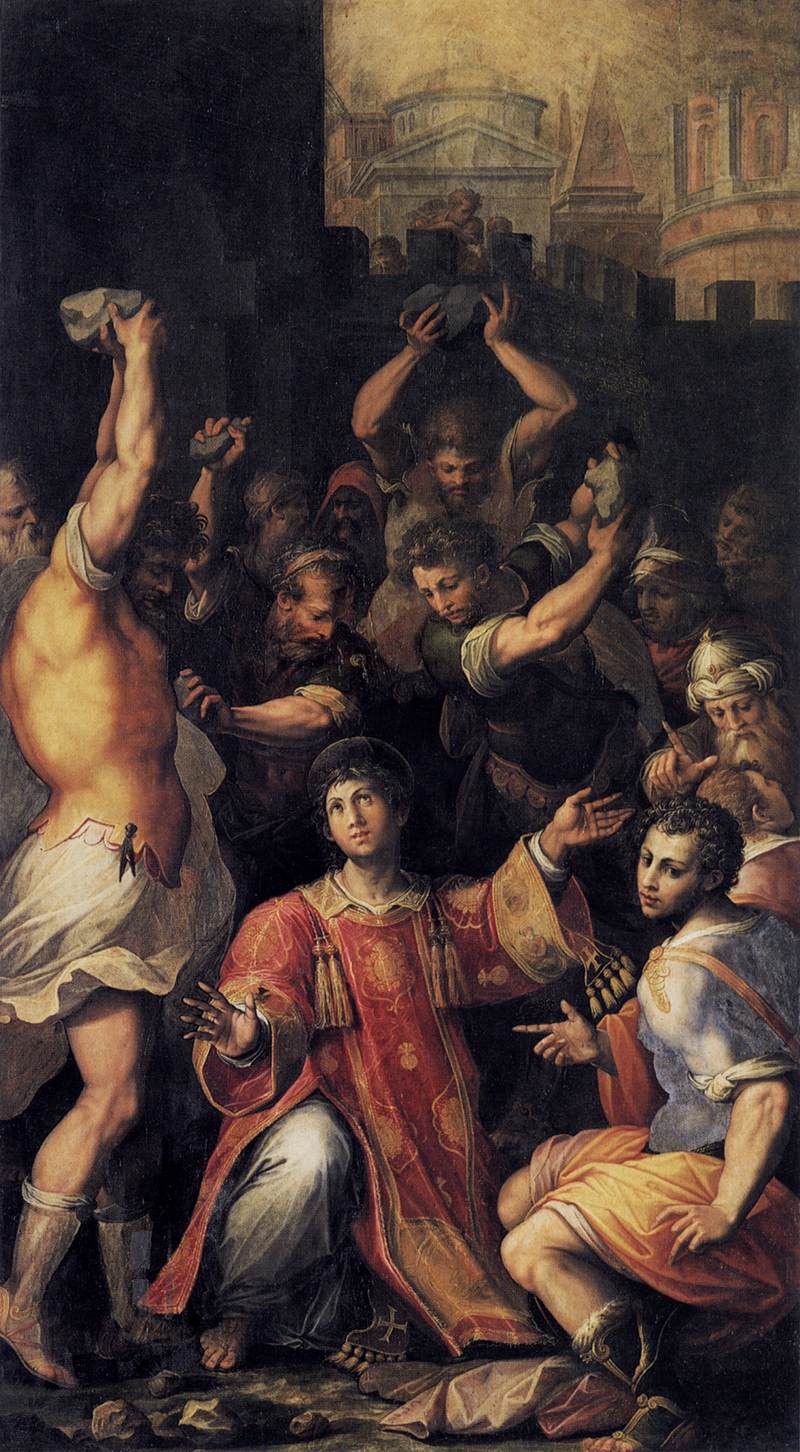
Giorgio Vasari Martyrdom of St Stephen.jpg
The birthday of the Christ child was an event of joy for each person involved in it, as it has been for Christians ever since. Yet it was a joy hedged about with anxieties. The Magi may have had to resort to people smugglers to escape from Palestine. The Holy Family were forced to seek asylum in Egypt. The infants of Bethlehem were massacred by the security services of a paranoid Middle-Eastern despot. It is no accident, then, that Holy Church has twinned the celebration of Christmas on the 25th with that of the first Christian martyr, St Stephen, on the 26th of December.

You do not have to be religious, of course, to appreciate the fragility of human happiness. In these days we are remembering the centenary of the First World War. There were many thousands of births in Cowley or Cologne, Dublin or Delhi, where unfeigned rejoicing was tempered by fear that the fathers of the babies would never live to see them. Weddings too were celebrated in the shadow of barbed wire and poison gas.

We are powerfully tempted to use magic to banish painful memories and anticipations from our thoughts. Not just the magic of spells and charms but that of money or power or alcohol or chocolate. Anything indeed that can keep an illusion of permanent happiness present within us. Since we know deep down, however, that none of this magic really works we are forever engaged in a restless search for new charms or more supercharged versions of current ones.

The genius of Christianity is not that it enables us to escape suffering (which is the false promise of magic) but that it brings hope into the midst of even the worst of our torments. St Stephen on trial for his life was transfigured not by fear but by the Holy Spirit “All those who sat in the Sanhedrin looked intently at him and saw that his face was like the face of an angel.(Acts 6:15) As he met his violent death he could say “Behold, I see the heavens opened and the Son of Man standing at the right hand of God.” (Acts 7:56)

This is not a compulsory and artificial cheerfulness, many Christians suffer from the effects of depression or anxiety. It is not the least of the fruits of the Incarnation that God Himself is our companion both in our times of greatest rejoicing and those of our greatest suffering because they are no more alien to Him than they are to us. The gift of a living faith is that we possess the knowledge that we are never alone (except when we sin.) That knowledge born into the world on the first Christmas morning accompanied St Stephen as the murderous fury of a mob vented itself upon Him.

The martyred Saint, like the child born on Christmas day, was an innocent victim of unjust persecution. Being a Christian in the world can bring down more suffering upon us than if we were not Christians. In many places today this is suffering of a kind which Jesus and St Stephen could readily recognise. In the West such persecution is, for the time being at least, not experienced and there is little more than ridicule, insult and exclusion to fear. Even so why should we take this extra cross upon ourselves? Pope St John Paul II once said “Christianity is not an opinion nor does it consist of empty words. Christianity is Christ!” (World Youth Day 2003.) We have no reason to celebrate the coming of the Christ child into the world if we do not also welcome Him into our hearts. His presence there is that knowledge which enables us to more than endure the sufferings we cannot escape. It is also the sign of contradiction which challenges not only our own faith in magic but that of others. We cannot escape our own illusions without also offending those who cling to theirs. The boy born that first Christmas would one day say “If the world hates you, realize that it hated me first.” (John 15:18)

If, however, you do bear Christ within you then you carry a love that cries out to be shared. You can share it by your words and by your actions and these can persuade friends. To persuade enemies you need something stronger yet. The Church Father Tertullian said  "the blood of martyrs is the seed of the Church." Living in a country where you are not likely to die for your faith does not deny you the opportunity to make the same witness. In 1914 and 1915, no doubt, there were many people who joined the armed forces because they feared the shame of being called a coward more than they feared the trenches of Flanders or the cold waters of the Atlantic. In a sense conscientious objectors showed at least as much courage by standing against the mentality of the day as those who signed up for fear of ridicule (which is not to denigrate the courage of the many who joined up fully conscious of the risks.) For us the challenge is to say ‘Yes, we really do believe “all that stuff” however absurd it makes us appear to you and that is why we are willing to welcome refugees, to visit prisoners, to speak kindly of enemies, to reject the magic of power and money.’ And that is why, like St Stephen, we too can hope to see the heavens opened and the Son of Man standing at the right hand of God.
@stevhep

My other blog is thoughtfully detached

(the painting is the Martyrdom of St Stephen by Vasari)


Friday, 23 October 2015

St Ælfric's by Night-A Christian Ghost Story

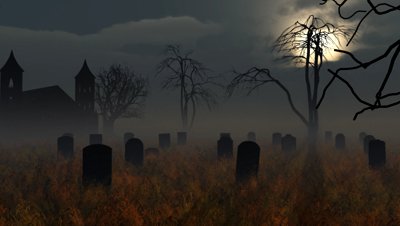
churchyard by night.jpg

She was a very modern vicar. Traditions and superstitions that got in the way of kindness and tolerance were discarded by her for kindness and tolerance were her religion. Being thoroughly modern she made no provision for technological failure. So when, one November evening, the electricity failed she was at a loss about what to do. Eventually she remembered that there were candles in the church and she dug out the torch left by her predecessor and set out from the presbytery.


The wind was blowing dead autumn leaves across the churchyard. Like shrouds they piled up against the West side of the gravestones. The owls and the rodents had resumed their nightly battle of wits with violent death as the stake. The vicar found herself muttering involuntary prayers as she hurried through and half-laughed at her reversion to the pre-modern little girl she had once been.


St Ælfric in the Marsh was an ancient building, it was already old when Henry VIII decided to change the religion of his people. It had seen many modern vicars in its time and many different modernities. It had spent more centuries without electricity than with it so power cuts did not unduly affect St Ælfric.The vicar stepped into the porch and automatically flicked the light switches in the vague hope that the church was on a different circuit to the presbytery. It wasn’t, the darkness was profound.


She pointed her torch in the direction of the Lady chapel, where people with a faith as ancient as that of the church they worshipped in still placed votive candles, and she started trudging towards it. After a while it occurred to her that she had been walking for a long time given that St Ælfric’s was such a small building. She flashed the torch round about her. Everything seemed normal and she guessed she must be about halfway between the porch and the chapel. More time passed and her brisk tread became hesitant. Once more she paused to inspect her surroundings. She seemed to be in precisely the same position as she had been before.      
“I must be walking in circles somehow” she thought “It’s very strange.”


Touching the wall of the church with her right hand to keep herself straight she continued her unusually prolonged expedition prudently turning the torch off to save the dying battery. After a while she had to move the hand to help support the weight on her left shoulder. For a while she struggled on before she thought to ask herself what that weight might be and how it had got there. It seemed to her that she had been carrying it for a long time but she had no memory of how or when it came to be there. Kneeling painfully down she placed the thing on the floor and flashed her torch at it.


Slowly she moved the feeble light up and down, down and up and then down again. However often she looked at it it retained the same appearance. It was large and crudely made out of wood. It was a cross. The vicar gulped several times.
Who needs candles anway?” she asked defiantly out loud and turned to make her way back to the reassuringly normal graveyard. Then she stopped. As clearly as if they had been spoken she became aware of the words-
You can leave, but then you will never know the answer.”


She stood for a moment in the faint light from the stained glass windows. Several layers of modernity were shed. A choice was being made. Was she a woman of faith above all or was she a creature of technology and artificiality. Weeping slightly she turned again, picked up her cross and struggled on through the darkness. After what seemed long ages she sunk under the weight and sobbed without restraint. Then, a gentle healing presence surrounded her and slowly she stood up once more. Her burden had become lighter somehow. But the darkness was still dark and the way still seemed long.


Suddenly she let out an un-vicarlike expression. She had stubbed her toe on something. Carefully exploring the dark area in front with her foot she discovered that she was standing in front of a step.
I must have veered off the way to the Lady chapel and come to the sanctuary instead.” she thought.
Firmly shouldering her cross she began to climb. More time passed. And then she found the light.


@stevhep

Like the Catholic Scot page on Facebook

My other blog is thoughtfully detached

Wednesday, 31 December 2014

Dark Epiphany

                                         Elijah Fed by the Ravens- Jusepe de Ribera

How long, Lord? Will you utterly forget me?
    How long will you hide your face from me?
How long must I carry sorrow in my soul,
    grief in my heart day after day?
Psalm 13:1-2

Want a New Years' Resolution ? Shed the pseudo-comfort of religion and grow into your own humanity.
Rational Minority ‏@MelaninAtheist  Dec 29

The Twelfth day of Christmas, January 6, has traditionally seen the Latin Church celebrate the visit of the Magi to the baby Jesus with His Mother and the Eastern Orthodox Church celebrate the Baptism of our Lord in the Jordan. Both celebrations are referred to as the Feast of the Epiphany because they represent moments of sudden understanding, a realisation that a manifestation of the power and wonder of God was somehow incarnate in the person of Mary's Son. For Orthodox and Catholic Christians such epiphanies are regularly recreated on a miniature scale through the Sacraments and above all through the Eucharist. Nonetheless for most hours out of the 24 the faithful have no such experiences. Conventional wisdom suggests that it is through serving our neighbours, above all the weak and vulnerable ones, or admiring the beauties of nature that we can most clearly perceive the presence of God hidden within that which surrounds us outside of the liturgies of the Church. So conventional indeed is the wisdom that I daresay you could find several thousand homilies, sermons, books, blogs or other media describing it. To this I have nothing to add, or indeed to subtract, the wisdom is a sound one.

There is another way of experiencing God however, a way which the Psalms often vividly express. this is the way of desolation, the experience of abandonment. That it is an authentic variety of religious experience we can see not only from the content of these ancient works themselves but also from the enduring way that generation after generation of believers, Christian and Jewish, have turned to them and made theme their own. If we assume that the @MelaninAtheist hypothesis is that the sole or dominant reason that people hold to a religious faith is because it offers them a form of comfort then this recurring desert experience of abandonment tends to disprove it. That most Christians most of the time experience desolation in their faith lives is not true but neither is it true that most of the time they experience comfort from it either. I would argue that all Christians are likely to feel that God has turned away from them at least some of the time and many of them feel it a great deal of the time.

If @MelaninAtheist is correct and the primary reason to cling to faith is that it gives a warm glow of falsely generated comfort then why continue to hold fast to it when it does no such thing? After all, in the West at least, the thought that God is not present to us because He doesn't exist will not be slow in obtruding itself into our thoughts. To persist in faith when its pulse is feeble, in hope when it seems vain and in loving that which does not respond is surely the opposite of being comforted. Of course, it might be argued that religion attracts masochists but it is a peculiar thing this Christian faith which attracts both the comfort-loving and the pain-loving at one and the same time with one and the same message.

The grim persistence of believers through the Dark Night of the Soul experience can I think be understood in light of the word 'abandonment.' It suggests that a prior relationship existed, that it was valued and nurturing but that it has now seemed to come to an abrupt end as the result of an arbitrary decision of the other party to it. The sense of misery and loss that the Christian feels is a product of the intensity of the relationship now apparently ended. But, it is not a simple bereavement for hope does not fully depart that at some point the relationship will resume and that any amount of suffering is worth enduring if only it will bring about that consummation. The perspective of  @MelaninAtheist is reversed for the person of faith will feel that it would be a pseudo-comfort to tell themselves 'there is no God' and that the affliction of God's absence is preferable to the fairy tale of God's non-existence.

                                             Elijah in the Desert by Washington Allston

What we might call the school of @MelaninAtheist might however be helpful in suggesting why it is that such periods of darkness are experienced by Christians. It is the 'imaginary friend' hypothesis, that is that God does not exist but believers create one to suit their image. This is half true, it is perfectly possible, indeed it is common, for people to believe in the One True God and yet to be idolaters at the same time. For the God they worship is not God as He is in Himself but a God largely of their own fantasy. The philosopher Simone Weil remarked Imagination and fiction make up more than three quarters of our real life. It is not simply in relation to faith that we are dominated by our imaginings but essentially all our relationships are clouded with what we think, but do not know, about others and what we think, but falsely, about ourselves and the same principle extends to our practical view of the world we inhabit. It is rare for reality, the thing in itself, to break through, mostly what the thing or person means to us is what we choose it to mean. Indeed, there is a school of philosophy which argues that there is no 'thing in itself' but that all meanings are subjective, that is, imaginary.

Professor Weil also remarked  Grace fills empty spaces, but it can only enter where there is a void to receive it, and it is grace itself which makes this void. The imagination is continually at work filling up all the fissures through which grace might pass. The desert experience of Christians is a time of stripping away. What they have imagined about God is now seen to be false. What they have imagined about themselves, their courage, steadfastness, enthusiasm &c. is also seen to be false. The dark epiphany of the long night is the realisation that beyond imagination, almost beyond hope, the God who really is has never, in truth abandoned them, He has been present as Himself only and not as the believers fantasm of Him and He can only be perceived as such when the believer is present to herself as herself and not as her overblown self-image.

So Christians can make their own the New Year wish of @MelaninAtheist, believers should indeed shed the pseudo-comfort of their religion and grow into their full humanity through the purest of possible relationships between themselves and God the Father through Jesus Christ the Son in the power of the Holy Spirit.

Follow @stevhep on Twitter, Google+ and Tumblr. Follow Catholic Scot on Pinterest
Like the Catholic Scot Blog Page on Facebook

I have two books on Wattpad The Adoration of the Pangolins my eco-friendly Nativity fable and This Contemplative Life a collection of some of my earlier blogs


Monday, 1 September 2014

Independence for Scotland?

                                       Tuscan School, The Martyrdom of Saint Andrew
For we have not here a lasting city, but we seek one that is to come.
Hebrews 13:14

For we ha'e faith
in Scotland's hidden poo'ers
The present's theirs
but a' the past and future's oors.

Hugh MacDiarmid 

This is a spiritual blog not a political one, forbye which most of the people who read it will never come within a thousand miles of Scotland. So what for am I writing a post anent the Scottish Independence referendum of September 2014? Firstly, because I'm Scottish about which more later. Secondly, because it seems like a good test case for considering the relationship between spirituality and patriotism or nationalism. After all if, for example, Christians hold that the 'one thing necessary'(Luke 10:42) is to 'seek first the Kingdom of God' (Matthew 6:33) then you would think that they would look with a lofty disdain on merely earthly kingdoms.

In the New Testament we frequently find suggestions that in our personal hierarchy of values we should put mundane considerations such as income, family or country low down on our list of priorities. For what doth it profit a man, if he gain the whole world, and suffer the loss of his own soul (Matthew 16:26If any man come to me, and hate not his father, and mother, and wife, and children, and brethren, and sisters, yea and his own life also, he cannot be my disciple (Luke 14:26) And within the historical context of the first century Holy Land the very actions of Jesus bear witness against the nationalism of many of his compatriots. Early in His mission we see Jesus therefore, when he knew that they would come to take him by force, and make him king, fled again into the mountain himself alone (John 6:15)

From the perspective of the Roman authorities the territory was full of Palestinian terrorist like Barabbas (Mark 15:7) who concealed themselves in the civilian population and used them as human shields while committing 'sedition and murder.' From the point of view of many Jews though groups like the Zealots were heroes who fought valiantly against a regional superpower. The fact that they had no chance of success did not matter much so long as they struck a blow on behalf of a people who had been beaten and dispossessed by a powerful foreign foe.There was an expectation that a figure anointed by God, Messiah or Christ means the anointed one, would be able to unify the Jews and turn the disparate groups of Jewish jihadis into a force capable of driving the occupying power into the sea. Many thought that Jesus would be such a figure. He, however, repudiated such nationalism. My kingdom is not of this world (John 18:36) He told the Roman governor Pilate.

The only witness in favour of nationalism in the New Testament comes from St Paul who writes For I could wish that I myself were accursed and separated from Christ for the sake of my brothers, my kin according to the flesh. (Romans 9:3) But even here he acknowledges that 'not all who are of Israel are Israel' meaning that membership of a nation or tribe or clan is secondary to the main business of life which is spiritual. Encountering and responding to the transcendent reality is what matters and anything in the material world which substitutes itself for the deity, such as the Nation, is is to be rejected. What we do in this world, such as loving our neighbours as ourselves, should flow from the divine encounter. Nothing can be put into a separate category where spiritual values do not apply.

Does this mean that Christians in Scotland should ignore the referendum and that they have nothing to contribute to the debate? No, but it means that their contribution needs to come from a distinct angle. There is nothing peculiarly Christian to be said about a common currency or how much oil is left in the North Sea (although there is a Christian angle to the removal of weapons of mass destruction from Scottish soil.) But Christianity does have something to say about community.

There are many things in this world which are both imaginary and real at the same time. Or, more precisely, they are real because they exist in people's imaginations. Money is one such thing. With a coloured piece of paper it is possible to buy haggis and chips but not a bottle of single malt whisky. With a slightly different coloured piece of paper one can buy not only a single malt but also several haggis suppers and a deep fried Mars bar while receiving numerous metal disks in exchange for the paper as well. The intrinsic worth of both bits of paper is identical but the value we ascribe to them is a collective act of the imagination. A country or nation is a similar imaginative creation. If nobody believes that a country exists then it does not exist. If large numbers of people believe that a country exists then that alone will have the power to bring it into being if it is not already established. Nature does not create nations. Geography does not create nations. God does not, in the usual sense of the term, create nations. Contrary to what you might expect economic necessity does not create nations either although it plays a part in forming and sustaining them. And most particularly science does not create nations.
       
A country is an imagined community. It is not real in the sense that no single individual imagines the country to be just precisely, just exactly the way that country actually is. People attribute to the nation a collective sensibility, a shared set of values which it does not possess. They understand it to have a shared history which it has never lived, all historical accounts are highly selective and in any event the past is even more of an act of the imagination than the national community is. Very often a patriot thinks of her country as being mostly composed of people very like herself but no country is very like any one person. Commitment to nation or love of country is an act of faith in an imagined reality. 'Just like Christianity!' the atheists among you will say. However that might be Christianity and Nationalism have this in common they proceed from a notion of Incarnation. Ideas which taken in isolation are mere abstractions take on life when they are clad with flesh. Moreover, from the beginning Christianity was Church, a community. Without Church there is no Christianity. Without community there is no Nation. The Church community is in part a visible, structured thing with rituals and sacraments, it subsists in the Catholic Church, and in part an invisible, spiritual thing, a hermit on a mountain is as much part of the community as a woman at a Papal Mass attended by millions. So too the Nation, whether it has a State of its own or not, exists in both visible and invisible forms. A People without shared rituals and agreed common signs is no People at all.

What the members of a nation agree among themselves to imagine about themselves becomes an incarnated reality. Christians who are called to be the leaven that leavens the whole must play their part in contributing ideas and values to this shared act of imagination. The loyalty which they have may be first and foremost to the person of Jesus Christ but He is not an abstraction. He is a person and He translates His ideas and values into action in the world. In the national conversation Christians must seek to ensure that the collective imagination becomes tinged with the personality of Christ so that the nation as a whole through its agencies, such as the health service or the foreign office, and each member of that collectivity acts more or less consciously under the influence and inspiration of these values. This should not be confused with evangelism or a mingling of Church and State. It is no business of the State or Nation to demand of its members allegiance to a religious confession as a prior condition of membership of that country. Explicitly recruiting to the Church is a task for the Church alone. But it is the business of Christians to diffuse their values in society and it is not the business of State or Nation to prevent them and to insist that religion is a purely private affair.

Leaving that to one side. Do Christians have a duty to love their country even if they are excluded from the national conversation or if their views are not heeded? The philosopher Simone Weil said that "In the soul of a Christian, the presence of the pagan virtue of patriotism acts as a dissolvent"  What she had in mind was specifically the patriotism of Rome (and also of Nazi Germany which was then occupying her native France) It is a pagan virtue if it is directed towards the notion of the State as an agent of power, as an idol to be worshipped. To love your country in the sense of saying 'we are number one' is morally abhorrent in a Christian. It is to identify might with right and your notion of God with the policies of your country. There is no sense in which Christians can justify sin in the name of patriotism. And to the extent that a country is mired in sin a Christian who wilfully either distorts theology to justify evil or pretends that her countries policies are something other than they really are has departed from Christianity and become an idolator. There is a positive duty of resistance laid upon Christians which always and everywhere trumps patriotism. Where a nation embarks upon a path which Christianity condemns Christians are bound to refuse cooperation at the very least.

Professor Weil, however, joined the Free French resistance out of the love which she bore for France. Patriotism can have many faces. She wrote One can love France, for the glory which would seem to insure for her a prolonged existence in space and time; or one can love her as something which being earthly, can be destroyed, and is all the more precious on that account. These are two distinct ways of loving" Recognising that a nation is a product of imagination, that at some point it comes into existence and at some point it will cease to be. Recognising too that it is no more and often less than the best of the best people who make it up Christians have a duty to strengthen the good, console the weak and defend the right. Their place in the nation is not as apologist nor as traitor but as bulwark. The great gift a nation can offer is stability. Through its institutions and shared values it can, for a time, allow for the maintenance of what most of its members agree to be good. Families can be safe, children can be taught, one generation can share its imagination with another. Christianity places the family at the centre of its project. Country and Church have a shared stake in stability which does not exclude, for example, one country seceding from another as may happen in Scotland. The argument here being that the shared values which Scots imagine that they have will be lost if the Union with an England possessed of antagonistic values persists.  

                                                        William Hepburn 1940-2011

Which brings me to my Scottishness. Since I live in partibus infidelium, also known as Exeter, and may, after all never return to my native land it is possible that the only practical impact upon me personally of a 'Yes' vote would be my having to acquire a different passport. Yet, if a nation is an incarnated set of ideas (or dreams) a person from that nation is a bearer of those ideas. Accept them or reject them ones life is never entirely free from an interior dialogue with them. It is usually through the family that those values are first transmitted. My late father William Hepburn, God rest his soul, was a Scottish Nationalist for around 50 years of his life. Had he lived few things in that life would have given him more happiness than to answer the question "do you want an independent Scotland?" with a resounding Yes! I can almost hear him saying "if not this time then next time" I never shared his nationalism, I don't share it now. I am sad beyond words that he cannot crown his act of imagination with a triumphal vote but my imagination is not his.

But he did teach me one thing of inestimable value about this debate. He became a Nationalist in the 1960's before oil was discovered in the North Sea. His conviction did not rest upon an argument from material well being. He believed that whether or not Scots were financially better off as a result of independence was not the most important consideration. The current debate among politicians has mostly been about money. The 'No' campaign offers no vision for a better tomorrow, it simply warns against a worse one where voters may be several hundred pounds a year out of pocket. The 'Yes' campaign counter by saying 'no they won't be.' If, however, Scotland does vote for independence it will likely not be about either of these propositions. Scots will be saying that, yes, they know there is a financial risk but, so long as the weak and vulnerable are protected that is not the real point of the thing. They will be voting for a future where the shared values that they imagine that they have will take an assured place as of right in the governance of their country. And they will be rejecting the values which they do not wish to have imposed upon them by distant elites.

Whether they know it or not many Scots who vote 'Yes' will be striking a blow against materialism. Because of the crass nature of the 'No' campaign few Scots will vote for it for other than material reasons. Christian Scots can make hard headed calculations as well as the next voter and there is nothing wrong with voting for the well being of your family and yourself provided it is not at another's expense. But when you vote for money and money alone it is a sign that your horizons are too low. I do not, as I said, share my father's Nationalism but I do share his thrawnness. It is one of the things that we tell ourselves about ourselves that we are a thrawn people. And it is a piece of imagination that to some extent has become a reality. If the 'No' camp thinks so little of Scots that it offers money in place of enduring values then many Scots will say the hell with  them I'm voting 'Yes' whatever the risks may be. Scotland is better than its politicians and it places more emphasis upon things that endure longer than a politician's promises. Independence for Scotland? I say Yes.

Follow @stevhep on Twitter, Google+ and Tumblr, follow Catholic Scot on Pinterest, like the Catholic Scot blog page on Facebook.